CJC-1295 + Ipamorelin 10mg
99% HPLC PurityA GHRH analogue paired with a GHRP in one vial, studied in growth-hormone research.
A$120.00AUD
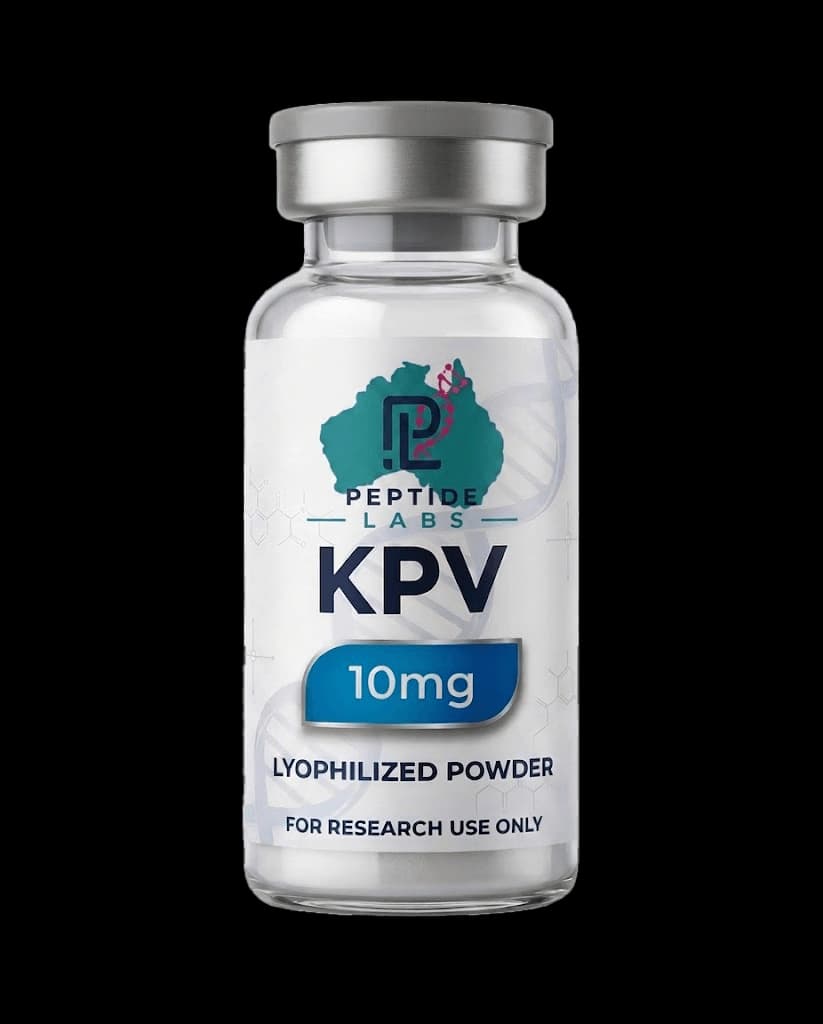
SKU: PCUK-KPV10 • Batch: 100277
Anti-inflammatory tripeptide fragment of alpha-MSH, studied in inflammatory-response research. 10mg lyophilised vial, 99.436% HPLC purity, COA verified.
Read the full description ↓Price includes GST
✓Free shipping on orders over $250 AUD
✓Australia Post tracked — Standard $12.99 / Express $18.99
✓Dispatched next business day (orders before 11PM AEST)
A GHRH analogue paired with a GHRP in one vial, studied in growth-hormone research.
Sterile water with 0.9% benzyl alcohol, used to reconstitute lyophilised peptides.
A triple GLP-1, GIP and glucagon receptor agonist, supplied as a 10mg lyophilised vial.
Purity independently verified at a leading Australian university via HPLC & mass spectrometry.
KPV is a naturally occurring tripeptide (Lys-Pro-Val) corresponding to the C-terminal fragment of alpha-melanocyte-stimulating hormone (α-MSH). Supplied as a lyophilised powder at 99.436% HPLC purity with full Certificate of Analysis (COA) documentation.
We manufacture KPV at our own GMP-compliant Australian facility, with chain-of-custody documentation kept unbroken from raw material to dispatch. Every batch is independently tested by a third-party lab for HPLC purity, mass spectrometry identity, LAL endotoxin (<1.0 EU/mg) and sterility before it ships.
Research has explored KPV's anti-inflammatory activity, particularly in models of gut and skin inflammation, where it is investigated for its ability to modulate inflammatory signalling. Strictly for in-vitro laboratory research only.
KPV is a tripeptide fragment of α-MSH studied in preclinical research for its anti-inflammatory activity, particularly in gut and skin inflammation models. All use is strictly for in-vitro laboratory research only.
Our KPV 10mg is independently verified at 99.436% HPLC purity. Each batch is tested by an accredited third-party laboratory and ships with a full Certificate of Analysis (COA).
Store lyophilised at −20°C for long-term stability. Once reconstituted with bacteriostatic water, store at 2–8°C and use within 4 weeks. Avoid repeated freeze-thaw cycles.
Add bacteriostatic water (BAC water) slowly to the vial at a 1–2mL volume. Gently swirl; do not shake. Allow the powder to dissolve completely before use in research protocols.
Yes. KPV is legal to purchase in Australia for legitimate in-vitro laboratory and research purposes. It is not approved for human consumption or therapeutic use.
KPV 10mg is sold strictly for in-vitro laboratory and research purposes only. This product is not intended for human consumption, therapeutic use, cosmetic use, or veterinary application. It has not been evaluated by the Therapeutic Goods Administration (TGA) or any other regulatory body for human use. You must be 18 years of age or older to purchase. By purchasing, you confirm that you are a qualified researcher and will use this product in compliance with all applicable Australian laws and regulations.
No questions yet — be the first to ask about this product.
Recent peer-reviewed studies from PubMed related to KPV. Provided for research context — not medical advice.
Melanocortin-derived tripeptide KPV has anti-inflammatory potential in murine models of inflammatory bowel disease
Kannengiesser K, Maaser C, Heidemann J, et al. · Inflammatory bowel diseases · 2008
PMID: 18092346
In situ mucoadhesive hydrogel capturing tripeptide KPV: the anti-inflammatory, antibacterial and repairing effect on chemotherapy-induced oral mucositis
Shao W, Chen R, Lin G, et al. · Biomaterials science · 2021
PMID: 34846053
PepT1-mediated tripeptide KPV uptake reduces intestinal inflammation
Dalmasso G, Charrier-Hisamuddin L, Nguyen HT, et al. · Gastroenterology · 2008
PMID: 18061177
Orally Targeted Delivery of Tripeptide KPV via Hyaluronic Acid-Functionalized Nanoparticles Efficiently Alleviates Ulcerative Colitis
Xiao B, Xu Z, Viennois E, et al. · Molecular therapy : the journal of the American Society of Gene Therapy · 2017
PMID: 28143741
Source: U.S. National Library of Medicine (PubMed). Citations are fetched live and cached; inclusion does not imply endorsement of any therapeutic use.